Trending

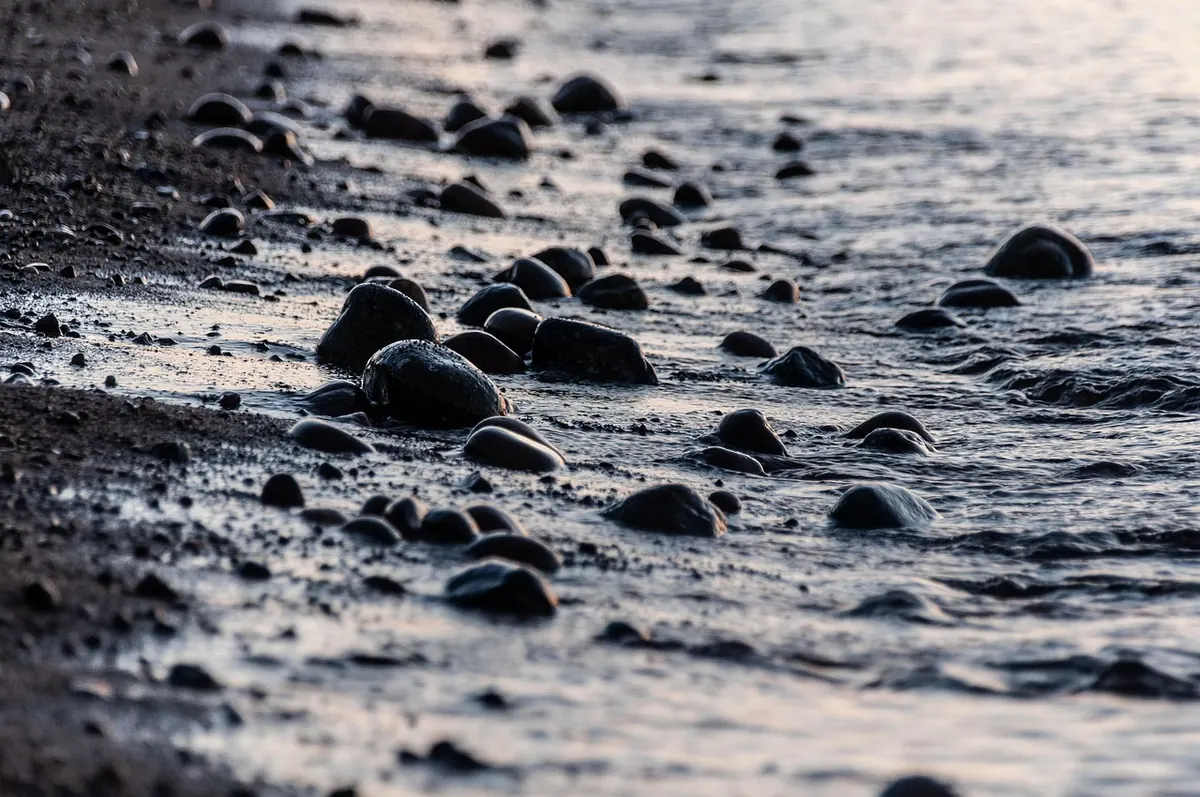
Summer amber on the UK coast usually turns up after a night of thunder and a good hard blow from the sea. You will not find it by strolling the promenade at noon. The pieces that reach the beach — honey-coloured chips, the occasional thumb-sized pebble, the odd deep red lump of resin — are lifted from the seabed by rough water, driven along the shore and then dropped in the last line of weed and shingle as the tide falls. Get the season, the tide and the wind right and you give yourself a genuine chance.
Amber is only slightly denser than seawater, which is what makes beachcombing for it realistic. It is not buoyant enough to float about on the surface, but it is light enough to be rolled along the seabed and thrown up the beach whenever the sea is churning. A flat calm leaves it where it lies. A storm picks it up, sorts it and dumps it in the same places it dumps small pebbles, coal fragments and broken shells.
The amber found around our coasts comes from more than one source. Some is Baltic material carried through the North Sea and reworked by currents over many years. Some derives from local deposits, including the London Clay, which outcrops around the Thames estuary and along parts of the Essex and north Kent coast, and from glacial sediments that are constantly being eroded on the east coast. That is why the richest hunting grounds lie on the eastern side of Britain, facing the North Sea.
These are established amber coasts, reported by generations of beachcombers. None of them guarantees a find, and the best beach on any particular morning is simply the one facing the wind.
Wherever you go, favour a beach with a mix of shingle and coarse sand, exposed properly at low water, and ideally with a stream or outfall crossing it. Running water sorts material, and the heaviest line of debris below the outfall is often worth crouching over.
Tides do more of the work than any piece of kit. Aim for the spring tides that follow a new or full moon, when the range is greatest and low water pulls back furthest down the beach. The window that matters is roughly two hours before low water until an hour after it. A falling tide is usually better than a rising one, because material is still being moved and deposited rather than buried again.
Time your visit around low water rather than simply arriving at the beach at a convenient hour. Tide times shift by roughly an hour each day, and they vary from beach to beach along the same stretch of coast, so check a local tide table for the exact spot. On parts of the south-east coast the tide appears to stand still for a while after low water, which buys you a little extra time on the lower foreshore.
The single most useful thing you can learn is wind direction. You want wind blowing onshore at the beach you plan to visit: a northerly round to easterly for most of the Norfolk and Yorkshire coasts, an easterly or north-easterly for Kent. Twelve hours or more of onshore wind, ideally with a decent swell behind it, is what shifts fresh material up the beach.
Summer storms are often short-lived. A thundery low can cross overnight and be gone by morning, which suits a dawn low tide perfectly. The day after the blow is often better than the storm itself: the water has cleaned up, the wind has dropped, and the newly washed amber is still sitting on the surface rather than buried under a metre of shingle. Flat, hot, windless spells are the worst of all — clear water, dry strandline, nothing new arriving.
Wet amber glows. Dry amber is dull, dusty and easy to walk straight past. This single fact changes how you search: work the wet band along the water's edge, look into shallow water where the pebbles are submerged, and carry a small bottle of water to splash on anything that looks promising.
Colour ranges from pale yellow through honey and orange to a deep cherry red, with occasional milky or greenish pieces. Good signs are a waxy, resinous sheen, rounded edges, and a warmth that stone does not have. Sea-worn glass, plastic, jet and flint are the usual confusions. Jet is black, dull and heavier; glass is colder and often sharper at the edges; flint is opaque and grey-brown; plastic is often oddly bright and usually floats far too readily.
Two simple tests help when you are unsure:
A small UV torch is also useful; much amber fluoresces blue-green under ultraviolet light, though not every piece does.
Much of the foreshore in England, Wales and Northern Ireland belongs to the Crown Estate, and hand-collecting small amounts of material such as amber for personal interest is generally tolerated. That is not the same as a free-for-all. Many beaches are covered by local byelaws, sit within Sites of Special Scientific Interest, nature reserves, National Trust land or Ministry of Defence ranges, and some are privately owned. In Scotland, responsible access rights cover recreation but not commercial collection.
Check before you go with the relevant landowner, local authority or estate office, and be clear about what you intend to do. Never dig into cliffs, dunes or banks, never hammer bedrock, and never take material from protected or scheduled sites. Take a modest amount for your own collection and leave the rest for others and for the beach itself.
Summer brings one extra legal and ethical point: shingle beaches are nesting habitat for ringed plover, little tern and oystercatcher. Keep well away from roped-off areas and any bird that is alarm-calling or feigning injury.
On safety, the usual coastal rules apply with force. Check tide tables and never let a falling tide tempt you out onto a sandbank or around a headland that may cut you off. Estuary mud and soft sand are genuinely dangerous, cliff faces shed material without warning, and wet pebbles are slippery. Tell someone where you are going, carry a charged phone, and be aware that signal is patchy on many of these beaches. For anything involving access, ownership or restrictions, seek proper advice locally before you travel.
Get out early, walk slowly, look at the wet shingle rather than the horizon, and treat every find as a bonus. Most summer trips produce nothing but a good morning on the coast. That is part of the appeal, and the pieces that do turn up are worth the wait.
Photo: wal_172619_II / Pixabay