Trending

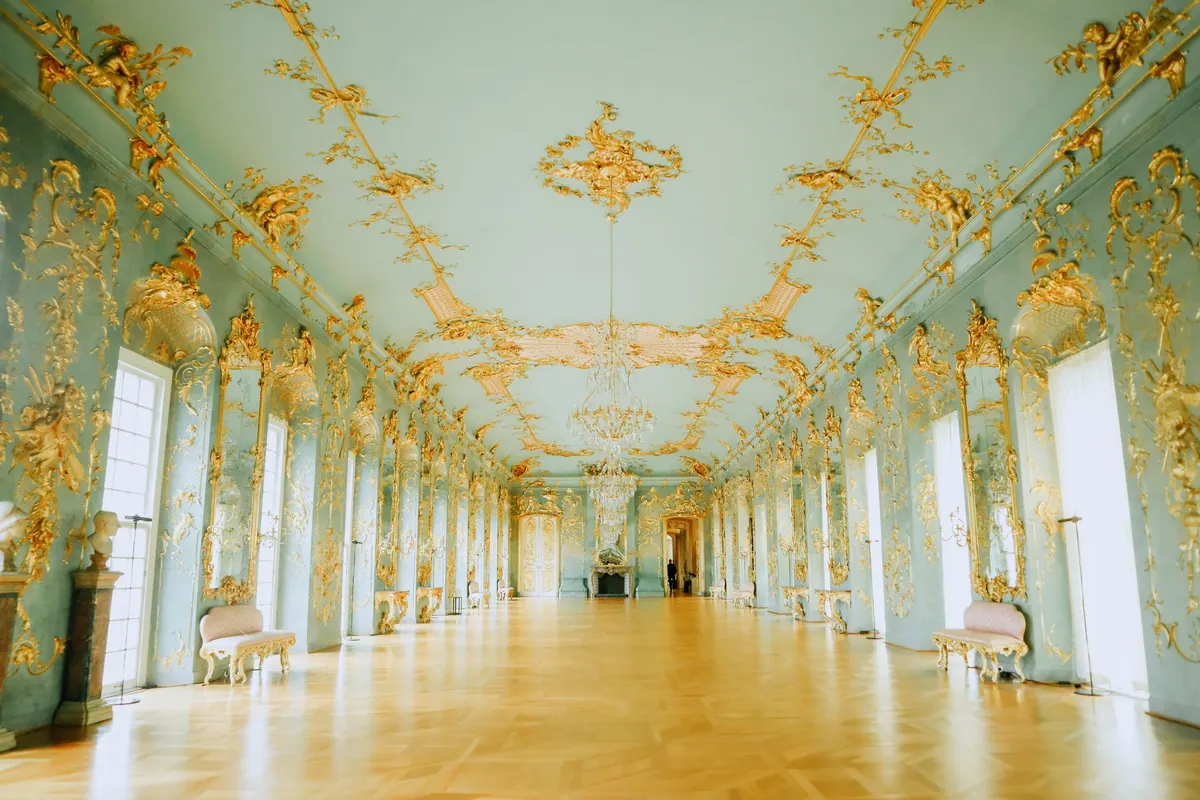
Amber is an awkward material to build a room from. It is light enough to float in salt water, soft enough to scratch with a fingernail, and it darkens and crazes when it is exposed to light, heat and dry air. Yet for part of the eighteenth century, one room in Europe was panelled with it from the floor to the cornice, and then, within a few years, it vanished. The story runs from a Berlin workshop to a palace outside St Petersburg, through a wartime railway siding, and into one of the longest treasure hunts in modern history.
Baltic amber had been gathered along the coast for centuries, and the shore near Königsberg — today's Kaliningrad — was one of the richest sources in Europe. So when Frederick I of Prussia wanted a room that would astonish visitors, amber said something about his territory as well as his taste.
Work began around 1701. The scheme was overseen by Andreas Schlüter, the architect and sculptor, and the panels were cut by Gottfried Wolfram, a Danish amber master. It went badly. Amber is brittle and splits along its grain; cutting it into thin panels and fitting those panels into frames invites cracks. Wolfram fell out of favour, and the commission passed to two Danzig masters, Ernst Schacht and Gottfried Turau, who carried the work on.
In 1716, Frederick William I — Frederick's son, a man far more interested in soldiers than in ornament — gave the finished panels to Peter the Great. It was a diplomatic present, offered as the two powers drew closer together.
The gift arrived, and then it sat. Peter died in 1725 before the panels were properly installed, and for years they were stored unassembled. That detail matters, because it shows the room was already in pieces long before anyone lost it.
Under Elizabeth, the panels were finally put up in the Winter Palace, and later moved to the Catherine Palace at Tsarskoye Selo, the imperial summer residence. There the architect Francesco Bartolomeo Rastrelli expanded the scheme, adding carved gilt figures, mirrors and Florentine mosaics — pictures made from cut stones rather than paint.
The finished room behaved differently at different times of day. In daylight the amber looked cloudy and honey-coloured; by candlelight it glowed. The often-repeated figure of six tonnes of amber cannot be checked now, but it gives a sense of the scale. It was less a decoration than a piece of engineering, and every panel was a compromise between beauty and the risk of splitting.
When German forces invaded the Soviet Union in 1941, curators at Tsarskoye Selo tried to evacuate the panels. Amber that has been pinned and glued to a wall for two centuries does not come down politely. Veneers cracked as they were lifted, and there was nowhere near enough time or packing material.
Staff removed what they could and covered the rest with ordinary wallpaper and layers of cotton wool, hoping the room would look like nothing worth taking. It did not work. Occupying troops found the panels and took the room apart within days, shipping it to Königsberg, where it was put on display in the castle.
In 1944, Allied bombing set fire to parts of Königsberg. In 1945 the city fell to the Red Army. The Amber Room was gone, and no verified trace of the main panels has been found since. What followed has the shape of a legend rather than an archive:
Anyone who tells you the Amber Room has been located is almost certainly selling something. Treat confident claims, blurry photographs and “secret” maps with the same caution you would apply to any other unproven provenance.
In 1979, Soviet authorities began a reconstruction at Tsarskoye Selo. The craftsmen had photographs, including a rare early colour image, plus drawings, architectural records and descriptions. They did not have the original panels, and they could not simply copy a technique that had taken decades to refine.
Amber was sourced from the Kaliningrad region, and the cutting was slow, dusty work. The project stalled more than once for lack of money; much of the later funding came from a German energy company. The new room opened in 2003, in time for St Petersburg's tercentenary.
It is a reconstruction, and it is honest about being one. What it captures well is the effect — the depth of colour, the way the surface changes as you move past it, the sheer improbability of the material.
The room is in the Catherine Palace at Tsarskoye Selo, in Pushkin, roughly an hour from central St Petersburg. A few practical points:
For collectors, the Amber Room is a reminder that amber is a fragile, light-sensitive material with a long history of being moved, copied and imitated. Store pieces away from direct sun and heat, handle them by the mount rather than the surface, and treat any dramatic story attached to a piece as a question to be checked, not a selling point. Visas, entry rules and opening times change, so verify the details with the palace or your travel provider before booking.
Photo: Pham Ngoc Anh / Pexels