Trending

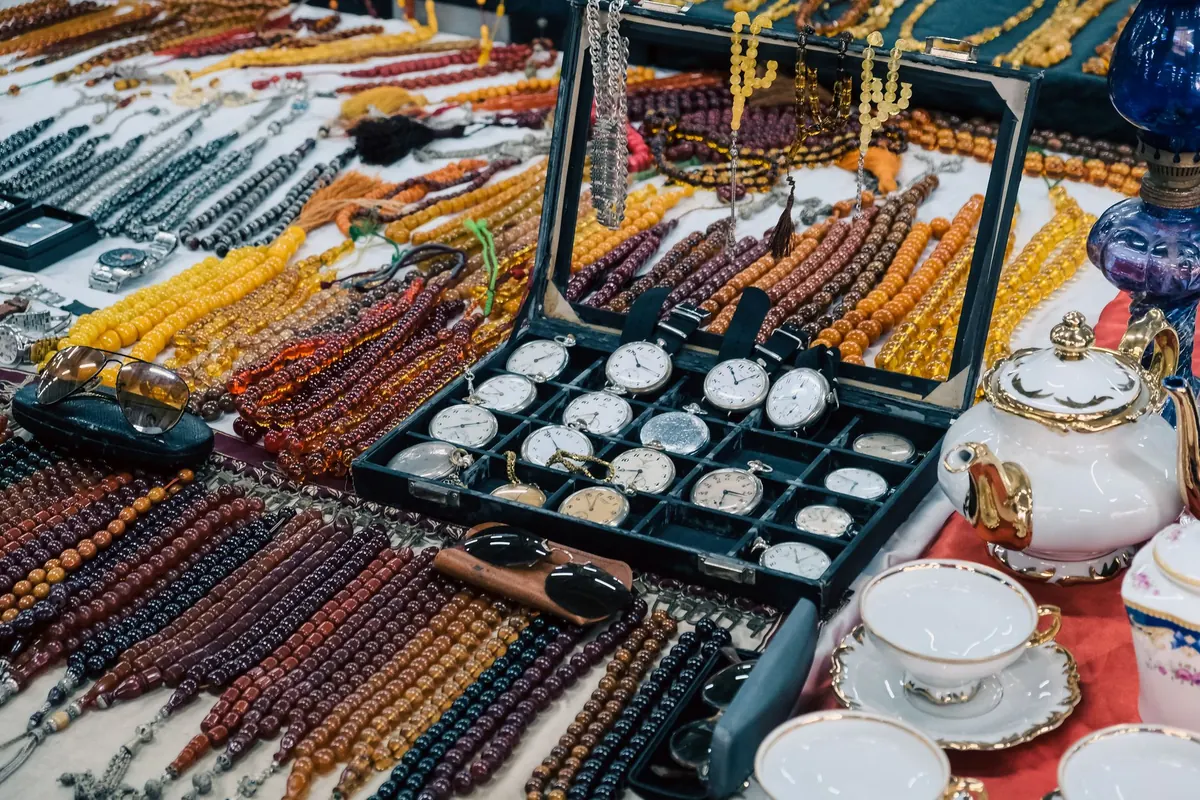
Amber has spent tens of millions of years buried in sediment, so it is tempting to assume it can shrug off a splash of perfume or a night in a jewellery box. It cannot. Fossilised tree resin sits at about 2 to 2.5 on the Mohs scale — roughly the same as your fingernail — and it reacts badly to alcohol, heat and very dry air. Most of the damage seen on amber jewellery, from cloudy patches to hairline cracks and chipped bead edges, comes from ordinary habits rather than dramatic accidents.
The encouraging part is that good care takes very little effort. A few minutes with the right cloth, a sensible place to keep things, and a willingness to hand a piece to a specialist when it needs one will keep a necklace or pendant looking much as it did on the day you bought it.
Amber is not a crystal. It has no grain and no cleavage, so it does not split along predictable lines; instead it dents, scratches, and develops fine internal fractures known as crazing when it dries out or gets too warm. That same structure makes it unusually vulnerable to solvents. Acetone, nail varnish remover, alcohol-based hand sanitiser, perfume, hairspray and insect repellent can dull the surface in seconds, and repeated exposure leaves it permanently hazy or slightly tacky.
Amber is also light. A large-looking pendant may weigh almost nothing, which means it is easy to knock against a table edge without registering the impact, and easy to store carelessly because it feels robust. Three things cause most of the harm:
For routine cleaning, after a day's wear, you need almost nothing. Work at a table with a soft towel underneath, not over a hard sink.
Do not soak amber, and never put it away damp. Water can creep between beads where they sit against the thread, and string that stays wet weakens and discolours. A quick wipe is always better than a long bath.
If a deep carving is genuinely grubby, or you suspect an old repair, stop there. That is a job for someone who works with resin.
Amber prefers roughly the conditions you do: moderate temperature, moderate humidity, out of direct sun. A dry, overheated room will slowly draw moisture from the resin and encourage crazing, while a windowsill in full sun can darken pale amber and make it more brittle over the years.
Put amber on last, once perfume, hairspray and moisturiser have dried, and take it off first at night. Skip it for swimming, hot tubs, saunas, gardening, heavy cleaning and cooking at a hot hob. Hand sanitiser deserves particular care: it is alcohol-based, and if you wear an amber bracelet or ring, frequent use is the quickest route to a dull, cloudy finish.
Check the strand now and then. Run a necklace gently through your fingers; if the thread feels slack, looks discoloured, or the beads move with a rattle rather than sitting snugly, it is due for restringing. Silk is traditional and kind to amber, and knotting between beads stops them rubbing against each other. A necklace worn often will usually need restringing every few years, which is normal maintenance rather than a sign of neglect.
Some problems should never be tackled at home. Watch for a bead chipped at the drill hole, which is the weakest point on any strand; a crack running through a bead; a loose, bent or worn bail or mount; a visible white line from an earlier repair; or a cloudy patch that appears to sit inside the amber rather than on the surface.
Resist superglue and household epoxy. Cyanoacrylate adhesives set hard, can leave a white bloom across the surrounding surface, and are very difficult to reverse once they have cured. Many resin repairs are also reversible in skilled hands, and a home repair can turn a straightforward job into a difficult one.
Look for a jeweller who is used to delicate organic materials — those who regularly handle pearl, opal or shell are a good starting point — and be clear about what you want. Cracked beads can sometimes be stabilised, re-polished or replaced, and a specialist may be able to re-cut a damaged bead into a smaller one. If a piece contains an inclusion, such as an insect or a leaf, or has family or historical importance, ask for conservation rather than repair, where the aim is to do as little as possible and keep every original part.
For valuable pieces, keep a photograph and any paperwork together, and if you are considering insurance, a sale or a significant repair, take advice from a qualified valuer before making decisions. It is worth asking about the cost and the expected result in writing before any work begins.
Most of the work is prevention, and it fits into a few minutes here and there:
Keep a soft cloth in the box, put amber on last and take it off first, and it will reward you with decades of the warm, clear glow that made you buy it in the first place.
Photo: Crab Lens / Pexels